Prescription • Doctor-Screened
Doctor-led evaluation • Evidence-based care
Finasteride (1 mg) for Male Pattern Hair Loss
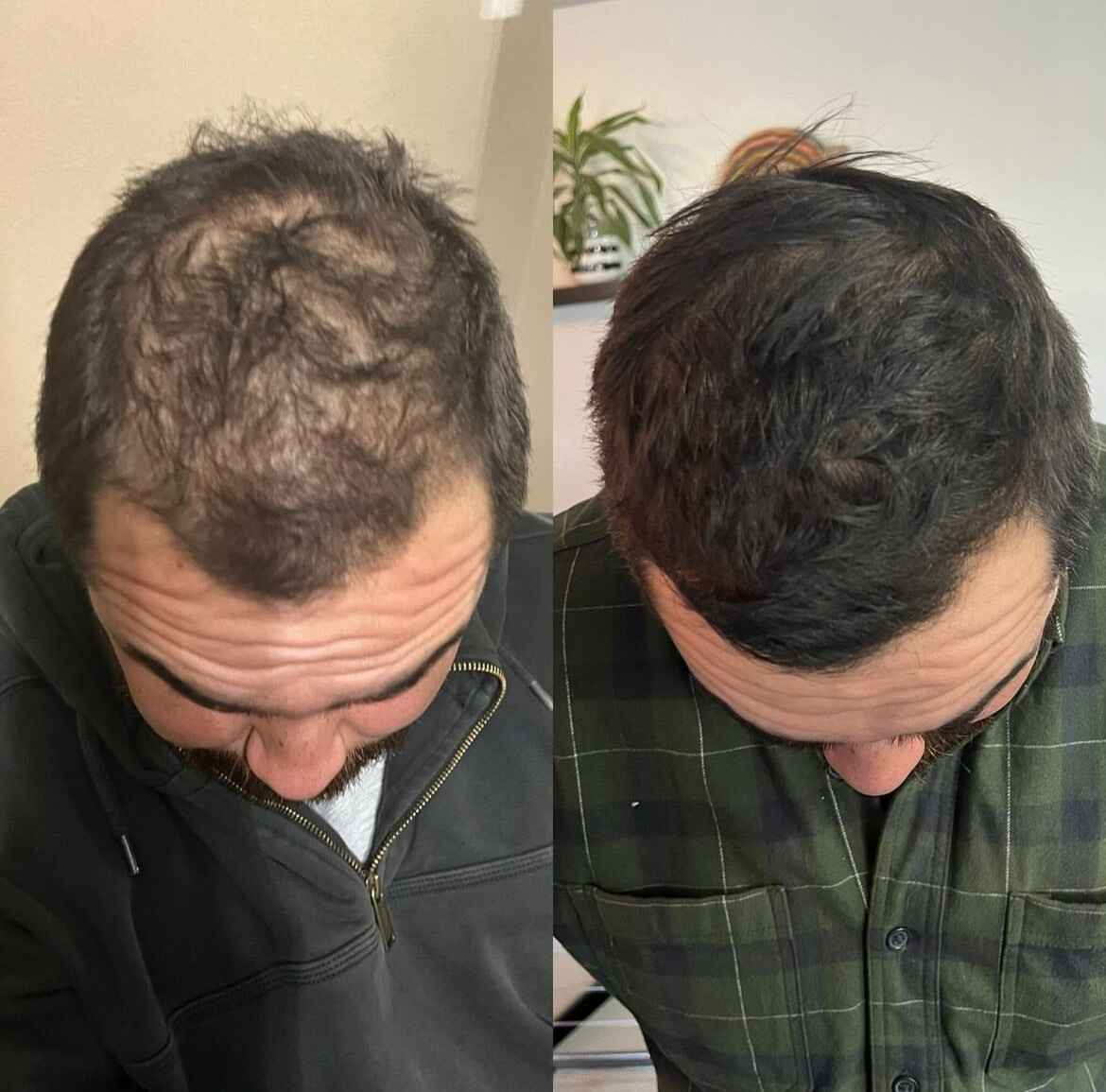
Finasteride helps slow or reverse androgenetic hair loss by reducing scalp DHT. We prescribe it when appropriate, monitor progress, and tailor your plan to maximise benefits and minimise risk.
DHT control
Type-II 5-AR inhibition
Once daily
as prescribed
Doctor monitored
results & tolerance
Oral 1 mg (men)
Slows miniaturisation
Evidence-backed
Daily, long-term
Combines with Minoxidil
Doctor follow-ups
How finasteride works
Finasteride selectively inhibits type-II 5-α-reductase, lowering dihydrotestosterone (DHT) levels in the scalp. Lower DHT reduces follicle miniaturisation, helping maintain and often improve hair density in androgenetic alopecia (male-pattern hair loss).
Anagen support
Helps follicles spend longer in the growth phase.
Miniaturisation slows
Reduces progressive thinning at crown & mid-scalp.
Benefits are gradual. Most men assess results over 4–12 months with ongoing use.
Who it’s for (and not for)
- For: Adult men with androgenetic alopecia (Norwood 2–5 commonly).
- Often combined with: Topical Minoxidil for synergistic effects.
- Not for: Women who are pregnant, trying to conceive, or breastfeeding.
- Caution: Discuss if you have liver disease, hormonal therapy, or prior adverse effects.
Finasteride is prescription-only. Your doctor will screen suitability, explain risks,
and recommend alternatives (e.g., topical finasteride, SMP, PRP) where appropriate.
What to expect on treatment
0–3 monthsStabilisation
Hair fall trend begins to slow; shedding may fluctuate early on.
4–6 monthsEarly gains
Miniaturisation slows; coverage looks slightly better in photos.
6–12 monthsVisible improvement
Density and hair calibre improve with consistent use.
Long-termMaintain
Continue as advised; stopping can reverse benefits over months.
Science snapshot
- Multiple double-blind trials in men show higher hair counts and improved appearance vs. placebo over 6–24 months.
- Best suited for crown and mid-scalp; hairline response varies—often combined with Minoxidil for front.
- Side-effects can occur in a minority; your doctor will discuss risks and monitoring.
Finasteride FAQs
A minority report decreased libido, erectile dysfunction or mood changes. Most are mild and reversible on stopping.
We discuss risks, monitor, and individualise plans (including topical options) to maximise safety.
Oral finasteride is contraindicated in women who are or may become pregnant.
In select post-menopausal cases, doctors may consider off-label options. We’ll guide you case-by-case.
Benefits gradually reverse over months after discontinuation. We’ll help you decide on maintenance strategies.
Yes—combinations are common and often complementary. Your doctor will design the right mix and sequence for your goals.
Considering finasteride?
Get a personalised, doctor-led plan with clear expectations and ongoing support.